
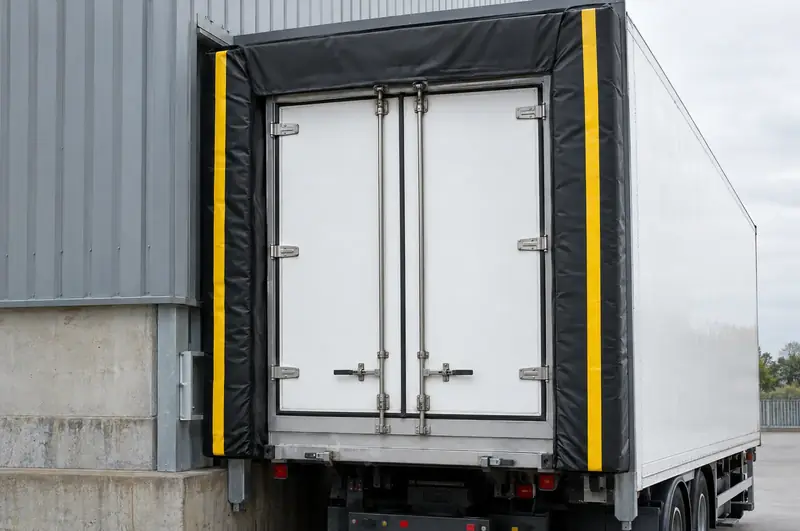
A dock seal is a set of fabric-covered foam pads fixed to the building around a loading bay door, usually a head pad and two side pads. When a trailer reverses in, its rear end presses into the foam, which compresses to close the gaps around the trailer body. Seals give a very tight fit but work best when the trailers using the bay are a consistent size.
What should sites in Lancashire consider?
Hygiene-sensitive sites in Lancashire, such as food processors, can use dock seals to reduce the gaps through which dust and pests might enter during loading. Where trailers reverse onto a bay in Lancashire slightly off-centre, tapered side pads and wheel guides help protect the seal from rubbing.
Before recommending seals for a bay in Lancashire, we check how consistent your trailers are, because mixed fleets are usually better served by a shelter.
Step one is a survey at your site in Lancashire, which costs nothing and carries no obligation. Step two is a written quote with a fixed price and a clear scope. Step three is installation, scheduled around your operation and carried out by specialist installation engineers working under our management, including evenings or weekends if agreed. Step four is handover, when the equipment is tested in front of you and the paperwork is passed over.
How much do dock seals cost?
A set of dock seals typically costs £1,100 to £2,600 per set, excluding VAT, supply and fit. A set is normally a head pad and two side pads for one bay.
The price depends on:
- Pad size and depth: larger openings and deeper foam cost more.
- Head arrangement: a fixed head pad, or a curtain head for varied trailer heights.
- Cover fabric: heavier coated fabric and replaceable wear pleats last longer.
- Pad shape: tapered side pads that guide the trailer and intrude less into the opening.
- Mounting: fixing direct to masonry, to a steel frame, or to brackets that set the projection.
- Site work: removing old seals, adjusting bumpers and powered access equipment.
Where the foam is still sound, new covers can cost less than new pads, and we will say if that is an option. After a free site survey you receive a fixed written price for the work described.
When is a dock seal a better choice than a shelter?
A dock seal is a better choice than a shelter when the trailers using a bay are consistent in size, the dock height suits them, and the tightest practical seal matters. Mixed fleets are usually better served by a shelter.
- Consistent fleets: dedicated vehicles or regular hauliers using the same trailer type.
- Temperature control: chilled or heated buildings where gaps around the trailer are costly.
- Security and hygiene: fewer gaps for pests, dust and unauthorised access during loading.
- Budget: seals cost less than inflatable shelters for a close fit.
The trade-offs are that seals can leave gaps at trailer door hinges, side pads can intrude into the trailer opening if poorly sized, and the covers wear from rubbing. If your trailers vary, compare our retractable dock shelters before deciding, as they leave the full opening clear.
Towns we cover in Lancashire
We take enquiries about dock seals from across Lancashire. These are the towns with their own pages:
- Preston
- Burnley
- Blackburn
- Blackpool
- Morecambe
- Lancaster
- Lytham St Annes
- Skelmersdale
- Leyland
- Accrington
- Chorley
- Darwen
- Thornton-Cleveleys
- Nelson
- Fleetwood
- Ormskirk
- Rawtenstall
- Colne
- Poulton-le-Fylde
- Heysham
- Haslingden
Budget range for supply and fit. The written quote after a free survey is the fixed price. All guide prices.
Planning, building control and safety law in England
Sites in Lancashire fall under the rules for England. Structural changes such as forming a new opening or a dock leveller pit may need Building Regulations approval, and external structures such as loading houses, canopies or new dock approaches can need planning permission from the local planning authority. We check what applies at survey and build any approvals into the plan.
Questions
Can you work outside our normal operating hours in Lancashire?
Yes, by arrangement. Evening, night and weekend working can be planned so the installation causes as little disruption as possible to your loading schedule. Out-of-hours work can affect the price, so mention it at the survey and we will include it in the written quote. The agreed times are confirmed in the programme before the job starts.
What details do you need from us to quote for dock seals?
To get started, send the site address in Lancashire, the number of bays or openings, approximate sizes, and photos of the dock from inside and outside. Tell us what vehicles you load, what goods you handle and any temperature requirements. Drawings help on new builds. We then arrange the free survey and confirm the details before the written quote is issued.
Can just the covers be replaced?
Yes, if the foam is still resilient and dry, new covers can often be fitted over the existing foam, which usually costs less than new pads. Waterlogged or permanently crushed foam should be replaced. Cover replacement is handled as a repair, with the visit price agreed beforehand.
Do trailer doors need to be opened before docking against a seal?
Yes, the rear doors are opened and folded back before the trailer reverses onto a seal, so the pads press against the rear of the trailer rather than the doors. Gaps can remain at the door hinges, which is a known limitation of seals compared with shelters.
Other services in Lancashire
Full guide to dock seals · All loading bay services in Lancashire