
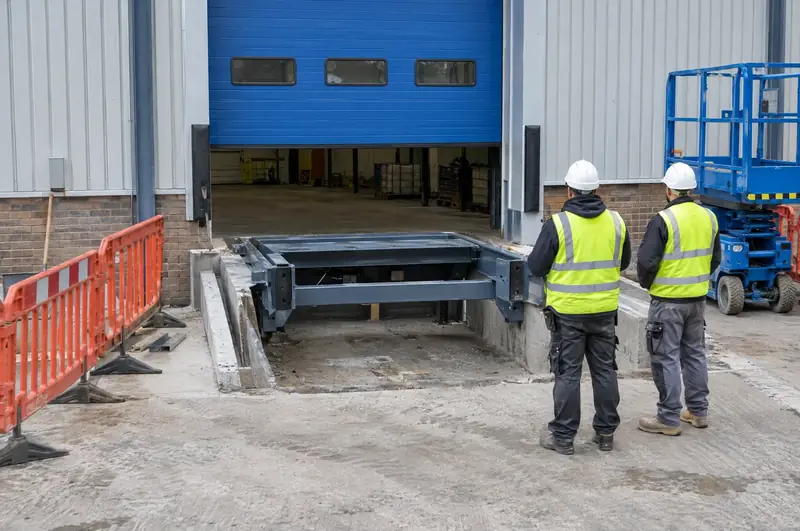
A loading bay conversion is a project that changes how a loading opening works, most often turning a ground-level door into a dock by lowering the approach, forming a leveller pit or adding a dock lift. It also covers upgrading older bays with new levellers, insulated doors, shelters and safety equipment while reusing the structure that is still sound.
Where does this fit at a dock in Cornwall?
Ground conditions, drainage and buried services vary from site to site in Cornwall, which is why every conversion starts with a levels survey before any design. Changes of use on industrial estates around Cornwall, such as manufacturing to distribution, often mean the existing loading arrangements no longer match the vehicles arriving.
Older factories in Cornwall built with ground-level roller shutters are frequent conversion candidates once the business starts receiving articulated trailers rather than vans.
We keep the process simple for sites in Cornwall. A free survey tells us what the dock needs; a fixed written quote tells you what it will cost and what is included. We then organise the installation, with specialist engineers under our management and a programme agreed around your shifts. Night and weekend work is available by arrangement. Before we leave, the new equipment is tested, demonstrated and handed over with its documentation.
What does a loading bay conversion involve, step by step?
A loading bay conversion runs from a levels survey through design and approvals to civils, equipment and commissioning. A typical recessed-dock conversion follows this order:
- Levels survey: floor, yard and drainage levels, plus buried services.
- Design: approach gradient, pit and dock face details, drainage and equipment layout.
- Approvals: building control and any planning application.
- Civils: breaking out, excavation, retaining walls, drainage, pit and new concrete.
- Opening works: adjusting the opening and making good the cladding or masonry.
- Equipment: leveller, door, shelter or seal, bumpers and wheel guides.
- Electrics and controls: supplies, panels, lights and any interlocks.
- Commissioning: testing with a trailer and handover.
Upgrade-only projects skip most of the civils, which is why they cost less and finish sooner. All work is carried out by specialist groundworks, installation and electrical teams working under our management.
When is upgrading an old bay better than rebuilding it?
Upgrading is usually better when the pit, dock face and opening are sound and the right size for today's trailers, because the expensive structural work can be reused. Rebuilding makes sense when the structure itself is the problem.
Signs an upgrade will work:
- the pit is dry, uncracked and suits a modern hydraulic leveller of the length you need;
- the opening suits a modern insulated door and shelter;
- dock height suits most of the trailers you receive.
Signs a rebuild is needed:
- the pit is cracked, holds water or is too short for the trailer height range;
- the dock face is broken up from years of impact;
- the opening is too small for current trailers and loads.
The survey records the condition of each element, and the quote explains which parts are reused and which are replaced.
Towns we cover in Cornwall
We take enquiries about loading bay conversions from across Cornwall. These are the towns with their own pages:
Budget range for supply and fit. The written quote after a free survey is the fixed price. All guide prices.
What do the rules in England mean for the work?
Lift tables and dock lifts in Cornwall may fall under LOLER, with thorough examination at least every 12 months, or every 6 months where people are lifted. It depends on the equipment and how it is used, and your insurer or competent person will confirm. Dock levellers are usually treated as work equipment under PUWER. We check what applies at survey.
Questions
Will you deal with building control and planning for a project in Cornwall?
We check at survey whether the work is likely to need approval. Forming a new opening or dock pit may need Building Regulations approval, a building warrant or building control approval, depending on the nation, and external structures such as loading houses can need planning permission. Where approval is needed, we explain what is involved, work with your designer or agent, and build it into the programme.
Can you work outside our normal operating hours in Cornwall?
Yes, by arrangement. Evening, night and weekend working can be planned so the installation causes as little disruption as possible to your loading schedule. Out-of-hours work can affect the price, so mention it at the survey and we will include it in the written quote. The agreed times are confirmed in the programme before the job starts.
Is a recessed dock or a dock lift better?
A recessed dock is usually better for high trailer volumes, because forklifts drive straight on and off. A dock lift suits tight sites, mixed fleets and lower volumes, and avoids excavating the yard. The survey looks at space, levels, drainage and traffic before recommending one.
How long does a loading bay conversion take?
The length of a conversion depends mainly on the civils, concrete curing and any approvals needed before work starts. Upgrade-only projects are much quicker than full conversions. We set out the programme for each bay in writing with the quote, so you can plan temporary loading.
Other services in Cornwall
Full guide to loading bay conversions · All loading bay services in Cornwall