
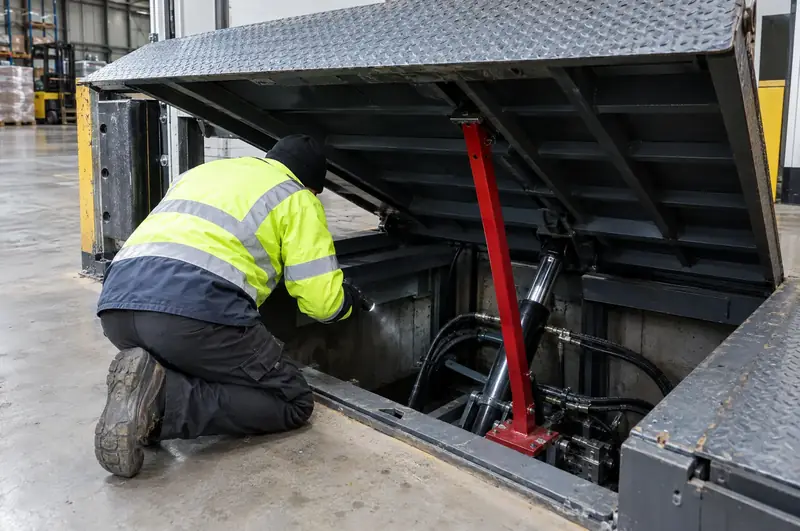
Dock leveller repair covers finding and fixing faults on the bridge between the dock and the trailer bed, including hydraulic cylinders, hoses and power packs, safety and check valves, lip hinges and lip cylinders, platform and lip damage, toe guards and control panels. It applies to swing-lip, telescopic-lip, mechanical and edge-of-dock levellers, with the aim of returning each one to safe working order.
Why do sites in West Sussex choose this?
Older units in West Sussex may still run mechanical or early hydraulic levellers, where a well-judged repair can keep the bay working before replacement is needed. Distribution docks in West Sussex that run several shifts put heavy cycles through leveller hydraulics, so leaks and slow operation can show up sooner.
Every leveller repair enquiry from West Sussex starts with you describing the fault, then a visit price agreed in writing before an engineer attends.
Before a repair visit in West Sussex, we ask three things: what the equipment is, what it is doing wrong and whether you can send photos. With that, we price the visit and confirm it in writing, and nobody attends until you agree. If the engineer finds further faults, they are quoted first and only fixed with your approval. Each visit ends with a written report of findings and work done.
What happens on site during a dock leveller repair?
During a leveller repair the bay is closed, the leveller is isolated and propped, and the engineer works from the pit or deck to diagnose and repair the fault. Neighbouring bays normally keep working.
- Close the bay: no trailer on the dock, the door closed and forklifts kept away.
- Isolate and prop: the leveller is electrically isolated and locked off, and the platform raised and supported on its maintenance strut before anyone goes underneath.
- Clean and inspect: debris and spilt oil are cleared from the pit so the fault can be traced.
- Repair: parts are fitted or welded. Anything beyond the agreed scope is quoted first.
- Test: the leveller is cycled, the lip checked and controls tested before the bay reopens.
It helps if you can provide a clear bay, a contact on site, photos or labels showing the leveller type and size, and any insurer inspection report that lists the defect.
What are the most common dock leveller faults?
The most common dock leveller faults are hydraulic leaks, power pack failures, lip and hinge damage, and control faults. The way the leveller behaves usually points to the cause.
- Will not rise, or rises slowly: power pack motor or pump, low oil, a failed contactor or a control fault.
- Sinks under load or drifts down when parked: leaking cylinder seals or a faulty check valve.
- Drops suddenly, then locks: the safety valve doing its job after a hose or fitting failure.
- Lip will not extend or falls short: a lip cylinder fault, a sequence valve problem or a seized lip hinge.
- Oil in the pit: a leaking hose, fitting or cylinder.
- Jerky or noisy movement: air in the hydraulics or worn pivots.
- Cracked deck, bent lip or broken hinge knuckles: impact damage or fatigue.
A leveller showing any of these faults should be taken out of use until it has been checked.
Towns we cover in West Sussex
We provide dock leveller repairs right across West Sussex. Pick the town closest to your site from the list below.
- Crawley
- Worthing
- Bognor Regis
- Littlehampton
- Horsham
- Haywards Heath
- Chichester
- Burgess Hill
- East Grinstead
- Shoreham-by-Sea
- Lancing
The visit price is agreed before anyone attends. All guide prices.
Planning, building control and safety law in England
Sites in West Sussex fall under the rules for England. Structural changes such as forming a new opening or a dock leveller pit may need Building Regulations approval, and external structures such as loading houses, canopies or new dock approaches can need planning permission from the local planning authority. We check what applies before any work starts and build any approvals into the plan.
Questions
What information helps before a repair visit?
Photos or a short video of the fault are the most useful thing you can send, along with the make and model from the data plate, a description of what happens when the equipment is operated and any error codes. For a site in West Sussex, also tell us about access, parking and site rules. With that, we can price the visit and bring the likely parts.
How often should equipment at our West Sussex site be serviced?
It depends on how hard the equipment works and on the manufacturer's recommendations. A multi-shift dock with frequent trailer movements needs more attention than a door that opens a few times a day. We suggest a schedule after looking at the equipment and how it is used, and we can line visits up with your insurance inspections where that helps.
Will the repair clear an insurer's defect notice?
A repair addresses the defect listed, and our written report records what was found and what was done, which you can keep with the insurer's report. Whether the insurer needs to re-inspect is between you and them. Any further defects found during the repair are quoted before work.
Is it safe to keep using a leaking dock leveller?
No. A dock leveller leaking hydraulic oil should be taken out of use until it has been checked, because the leak may affect how the platform holds its position under load. Oil in the pit is also a slip and environmental hazard. Describe the leak and send photos so we can plan the repair.
Other services in West Sussex
Full guide to dock leveller repairs · All loading bay services in West Sussex