
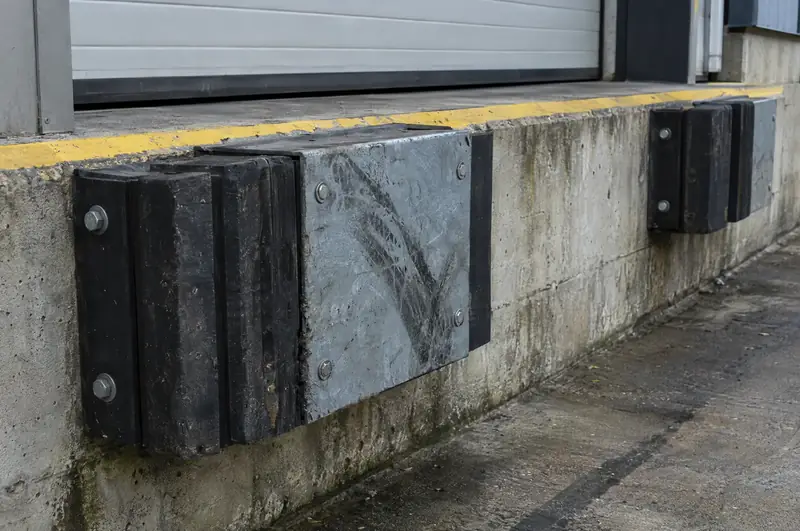
Dock bumpers are rubber or rubber-and-steel buffers fixed to the face of a loading dock, either side of the leveller, to absorb the impact of reversing vehicles. They hold the trailer a set distance from the building, protect the dock wall, leveller and door, and help a dock seal or shelter compress evenly. Most bays use two bumpers, replaced as they wear.
Where does this fit at a dock in Dorset?
Distribution sheds in Dorset that take trailers on and off the dock all day wear through bumper rubber faster than quieter sites, so it pays to check them at every service. Multi-tenant estates in Dorset often see new occupants arrive with different fleets, and bumpers set up for one tenant's trailers may not suit the next.
Chilled and food distribution operations in Dorset depend on dock seals compressing evenly, which only happens when the bumpers behind them are still the correct depth.
We never ask you to commit before you have a fixed price. A free survey at your Dorset site comes first, followed by a written quote. When the order goes ahead, we plan the installation around your operation, book any out-of-hours working you need and manage the specialist installation engineers on site. The job ends with a full test, a run-through for the people who will use the equipment and a set of handover documents.
Do dock bumpers need inspecting under PUWER?
Dock bumpers should be checked whenever the loading bay is serviced, because they protect equipment that the Provision and Use of Work Equipment Regulations 1998 (PUWER) apply to. In Northern Ireland the equivalent is PUWER (Northern Ireland) 1999.
PUWER requires work equipment, including dock levellers, loading bay doors and shelters, to be suitable, maintained in a safe condition and inspected where deterioration could lead to danger. A bumper worn down to its backing lets trailers strike the leveller lip and front plate, which can crack welds, bend hinges and leave a leveller that is no longer safe to drive across.
Engineering insurers commonly inspect dock levellers under PUWER at 12-month intervals. Replacing a worn bumper usually costs far less than repairing the leveller it should have protected.
The health and safety regulator is HSE in Great Britain and HSENI in Northern Ireland. Including bumpers in planned maintenance checks shows the dock is being looked after.
What happens on site when dock bumpers are fitted?
Fitting dock bumpers is a short job carried out from yard level, and only the bay being worked on is taken out of use.
- Isolate the bay: no trailer on the dock, the leveller parked and the door closed, with the yard area in front coned off.
- Remove the old bumpers: worn units and corroded fixings are taken off and the dock face is checked for cracked or spalled concrete.
- Fix the new bumpers: holes are drilled and the bumpers secured with resin or mechanical anchors, or welded to existing steelwork where that gives the better fixing.
- Allow cure time: resin anchors need time to cure before a trailer is reversed on to them, and the engineer will confirm when the bay can reopen.
We ask you to provide a clear bay, safe access to the yard, a named contact on the day and details of any permit-to-work or site induction. If the dock face needs concrete repair first, that is identified at survey and priced in the quote rather than discovered on the day.
Towns we cover in Dorset
Find your town in the list below for details of dock bumpers across Dorset, or contact us if your location is not shown.
Budget range for supply and fit. The written quote after a free survey is the fixed price. All guide prices.
Regulations and approvals in England
Sites in Dorset fall under the rules for England. Structural changes such as forming a new opening or a dock leveller pit may need Building Regulations approval, and external structures such as loading houses, canopies or new dock approaches can need planning permission from the local planning authority. We check what applies at survey and build any approvals into the plan.
Questions
Can you work outside our normal operating hours in Dorset?
Yes, by arrangement. Evening, night and weekend working can be planned so the installation causes as little disruption as possible to your loading schedule. Out-of-hours work can affect the price, so mention it at the survey and we will include it in the written quote. The agreed times are confirmed in the programme before the job starts.
Is VAT included in your guide prices for dock bumpers?
No. Our customers are businesses, so guide prices exclude VAT, which is added at the standard rate. The same guide range applies in Dorset as everywhere else: for dock bumpers, it is £120 to £480 per bumper, excluding VAT. It covers supply and fit for a typical installation. Your fixed written quote after the free survey shows the net price, the VAT and exactly what is included.
How long do dock bumpers last?
There is no fixed lifespan for a dock bumper, because wear depends on how many trailers use the bay, how hard drivers reverse and how much the trailer moves during loading. A quiet dock may keep the same bumpers for many years, while a busy distribution bay can wear through the rubber much sooner. Checking them at each service visit catches wear early.
How many dock bumpers does a loading bay need?
Most loading bays need two dock bumpers, one fixed either side of the leveller. Docks receiving a wide mix of vehicles sometimes need taller bumpers or an extra lower pair so every vehicle meets rubber before it meets the wall. We confirm the number and layout at survey.
Other services in Dorset
Full guide to dock bumpers · All loading bay services in Dorset