
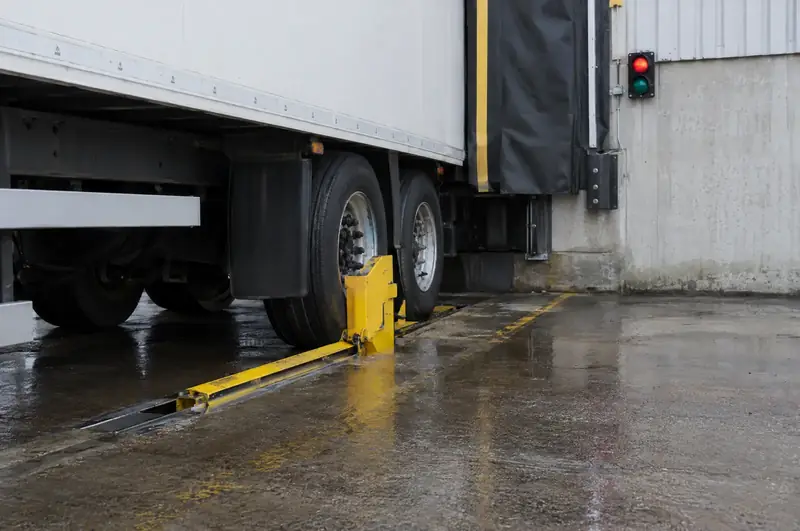
A vehicle restraint is a device at a loading bay that physically holds a trailer against the dock until it is safe to leave. In the UK most systems act on the rear wheel, either as a powered wheel-based restraint or a sensor wheel chock. Restraints guard against early drive-away and trailer creep, and are usually interlocked with the door and dock traffic lights.
Is this right for your site in West Glamorgan?
Multi-tenant logistics parks around West Glamorgan can benefit from restraints when several tenants share yard space and trailers from different fleets arrive throughout the day. Yards around West Glamorgan that park uncoupled trailers at the dock can see trailers creep under forklift traffic, and a wheel-based restraint helps keep the leveller lip on the bed.
New-build distribution sheds in West Glamorgan can have restraint rails and ducting planned into the yard slab from the start, which is simpler than cutting them in later.
Before anything is ordered, we visit your site in West Glamorgan for a free survey and then send a written quote with a fixed price. From that point we manage the installation, coordinating delivery, access and any other trades. Fitting is done by specialist installation engineers engaged and managed by us, at times that suit your operation, including out of hours where agreed. You get a tested installation, a demonstration for your team and the manufacturer documentation.
How much does a vehicle restraint cost?
A vehicle restraint typically costs £4,200 to £9,800 per bay, supplied and installed, excluding VAT. Sensor wheel chocks linked to the dock controls usually sit towards the lower end, and fully automatic wheel-based restraints with rail and interlocks towards the upper end.
What moves the price:
- Restraint type: a sensor chock needs far less hardware and groundwork than a powered, rail-mounted wheel restraint.
- Yard condition: rail-mounted units need a sound, level concrete apron. Broken concrete or tarmac may need a new base, priced after survey.
- Cabling: the distance from the restraint to the dock control panel, and whether ducts must be cut into the yard.
- Integration: linking to existing door and leveller controls is simpler on modern panels; older panels may need replacing.
- Number of bays and working hours: several bays in one project spread set-up costs, while out-of-hours work adds cost.
All figures are guide budgets. After a free site survey we send a written quote, and that quote is the fixed price. VAT is added at the standard rate.
Wheel-based or hook restraint: which suits UK trailers?
Wheel-based restraints and sensor wheel chocks suit most UK trailers, because they act on the rear wheel rather than on the back of the vehicle. Hook restraints, which catch the rear impact guard (sometimes called an ICC bar), are common elsewhere but suit fewer UK fleets.
- Wheel-based restraint: a steel guide rail fixed to the yard, with an arm or chock that moves against the rear wheel, either powered or pushed into place by the operative. It works regardless of tail lifts or underrun guard design.
- Sensor wheel chock: a heavy chock placed in front of the wheel, with a sensor or parking station that tells the dock controls it is in position. Lower cost and minimal groundwork, but it relies on someone placing it each time.
- Hook restraint: mounted on the dock face and hooking the rear guard. UK and European trailers vary widely at the rear, and tail lifts often get in the way, so this type needs checking against your actual fleet.
Towns we cover in West Glamorgan
Below is a list of towns in West Glamorgan for vehicle restraints. Each page explains our approach for sites in that town.
Budget range for supply and fit. The written quote after a free survey is the fixed price. All guide prices.
What do the rules in Wales mean for the work?
HSE regulates workplace safety in Wales. Loading bays in West Glamorgan need doors that meet regulation 18 of the Workplace (Health, Safety and Welfare) Regulations 1992, work equipment maintained under PUWER, and safeguards that stop vehicles leaving the dock too early. We check what applies at survey and build those measures into the design.
Questions
Is the site survey in West Glamorgan free?
Yes. For new installations, replacements, upgrades, conversions and complete bays, the site survey and written quote are free and come with no obligation. The survey lets us measure the openings, check the dock and structure, and understand how the bay is used, so the quote reflects your site. Repair and servicing visits are different: they are chargeable, with the price agreed before anyone attends.
What warranty comes with new loading bay equipment?
New equipment comes with the manufacturer's warranty, which varies by product. Our workmanship terms are set out in writing in the quote for your West Glamorgan site, so you can see what is covered before you commit. Check the warranty terms for any servicing conditions, and we can quote for planned maintenance once the installation is complete.
What happens if a powered restraint loses power?
Powered restraints are normally designed with a manual release so a trailer is not trapped on the bay if power is lost. Your site procedure should say who is allowed to use the release and what checks they make first. We explain the release method at handover.
Can a vehicle restraint be fitted to an existing bay?
Yes, restraints are commonly retrofitted to existing bays. The main questions are whether the yard concrete in front of the bay is sound enough to anchor a rail, how cables will reach the dock controls, and whether the existing door and leveller panels can accept interlocks. Sensor chocks are often chosen where groundwork needs to be kept to a minimum.
Other services in West Glamorgan
Full guide to vehicle restraints · All loading bay services in West Glamorgan