
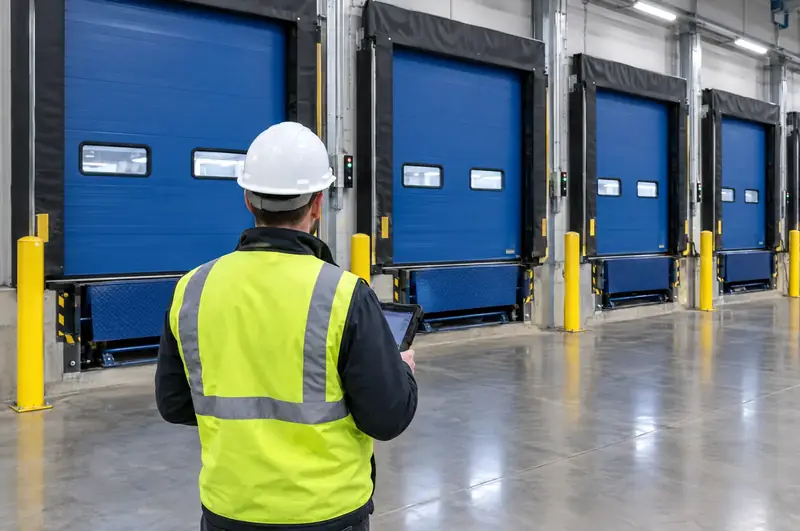
Loading bay servicing covers planned preventive maintenance of dock equipment at agreed intervals. An engineer checks, adjusts and lubricates doors, levellers, shelters, seals, restraints, traffic lights and lift tables, tests safety devices and records defects in a written report. Servicing supports, but is separate from, insurer inspections and the LOLER thorough examinations that some equipment needs.
Is this right for your site in Derbyshire?
Property managers looking after several units around Derbyshire can use one servicing schedule and reporting format across every building they manage. Lift tables at warehouses in Derbyshire need a LOLER thorough examination regime alongside servicing, and the two can be scheduled to suit the operation.
When you take on a unit in Derbyshire with no maintenance history, a baseline service report gives you a clear starting point for future planning.
When something stops working at a loading bay in Derbyshire, contact us with a description and, ideally, photos. We will confirm the cost of the visit in writing before booking anyone. If the engineer finds the problem goes further than expected, you receive a quote for the additional work and decide whether to proceed. Every visit is followed by a written report you can keep with your maintenance records.
What happens to defects found during a service?
Defects found during a service are recorded in the written report, graded by priority and quoted as repairs before any work is done. You decide what is repaired and when.
- Unsafe: the item should not be used until repaired. The engineer tells you on the day and the item is left out of use.
- Repair soon: wear or damage that will get worse, such as a weeping hose or a fraying cable.
- Monitor: early wear to check again at the next visit.
Each repair is priced in writing, and parts can be ordered once you approve so the work can often be done on a planned return visit. Keeping service reports alongside insurer reports gives a clear maintenance record for audits, insurers and landlords.
Over time the reports also show which items keep failing, which helps when deciding whether to keep repairing equipment or budget for replacement.
How often should a loading bay be serviced?
Busy loading docks are commonly serviced twice a year, while lightly used bays may only need one visit a year. The right frequency depends on how hard the equipment works and what your risk assessment, the manufacturer's instructions and your insurer expect.
- Twice a year: common for distribution and logistics docks handling trailers through the day.
- Once a year: may suit occasional-use bays, such as a single goods-in door at a manufacturing site.
- More often: worth considering for docks running several shifts, very high door cycle counts, or harsh conditions such as frozen stores.
Insurer inspections and LOLER thorough examinations run on their own schedules. Many sites time a service shortly before each inspection so routine defects are dealt with first.
Our guide to loading bay maintenance sets out what a service covers and how to plan the frequency.
Towns we cover in Derbyshire
Looking for loading bay servicing in a specific part of Derbyshire? Start with the nearest town on this list.
- Derby
- Chesterfield
- Long Eaton
- Ilkeston
- Swadlincote
- Staveley
- Belper
- Heanor
- Alfreton
- Dronfield
- Ripley
- Buxton
- New Mills
- Glossop
The visit price is agreed before anyone attends. All guide prices.
What do the rules in England mean for the work?
Powered doors and dock equipment installed in England may carry the UKCA or the CE mark, and doors are covered by the product standard BS EN 13241. We hand over the relevant documentation for each item fitted in Derbyshire. Planning and Building Regulations questions are never assumed either way: we check what applies before any work starts, so you know before work is booked.
Questions
How often should equipment at our Derbyshire site be serviced?
It depends on how hard the equipment works and on the manufacturer's recommendations. A multi-shift dock with frequent trailer movements needs more attention than a door that opens a few times a day. We suggest a schedule after looking at the equipment and how it is used, and we can line visits up with your insurance inspections where that helps.
What information helps before a repair visit?
Photos or a short video of the fault are the most useful thing you can send, along with the make and model from the data plate, a description of what happens when the equipment is operated and any error codes. For a site in Derbyshire, also tell us about access, parking and site rules. With that, we can price the visit and bring the likely parts.
What is included in the service price?
The service price covers checking, adjusting and lubricating each item, testing its safety devices and a written report. Parts and repair work are not included; they are quoted separately so you can decide what to approve. Minor adjustments made during the visit are part of the service.
How often should dock levellers be serviced?
Dock levellers on busy docks are commonly serviced twice a year, while lightly used levellers may only need an annual service. The right interval depends on usage, the manufacturer's instructions and your risk assessment. Insurer inspections and any LOLER examinations run on their own schedules.
Other services in Derbyshire
Full guide to loading bay servicing · All loading bay services in Derbyshire