
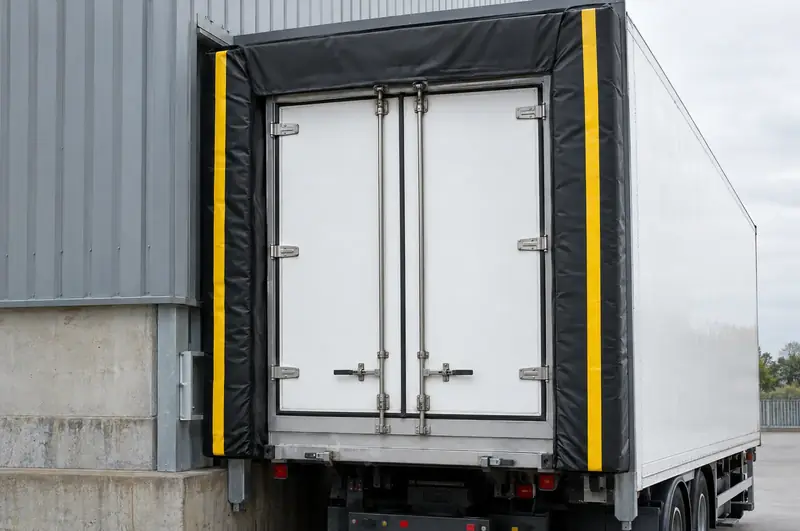
A dock seal is a set of fabric-covered foam pads fixed to the building around a loading bay door, usually a head pad and two side pads. When a trailer reverses in, its rear end presses into the foam, which compresses to close the gaps around the trailer body. Seals give a very tight fit but work best when the trailers using the bay are a consistent size.
Where does this fit at a dock in Suffolk?
Where trailers reverse onto a bay in Suffolk slightly off-centre, tapered side pads and wheel guides help protect the seal from rubbing. A dedicated chilled fleet serving a site in Suffolk can be sealed closely with foam pads, at lower cost than fitting an inflatable shelter.
Hygiene-sensitive sites in Suffolk, such as food processors, can use dock seals to reduce the gaps through which dust and pests might enter during loading.
A single contact at Loading Bay Doors handles your project in Suffolk from start to finish. The free site survey and fixed written quote come first, with no obligation to proceed. We then book the installation for times that suit the operation, including out of hours by arrangement, and manage the specialist engineers on site. At the end we commission and test the equipment, walk your team through it and provide the documentation.
What do workplace transport rules mean for a sealed dock?
A sealed dock still needs safeguards against a trailer leaving early, and the seal, bumpers and other dock equipment must be kept in safe working order. In Great Britain the regulator is HSE; in Northern Ireland it is HSENI.
- Drive-away: HSE workplace transport guidance (HSG136) and the HSE loading factsheet call for safeguards against drivers driving away too early, including traffic lights, vehicle or trailer restraints, or the person in charge keeping keys or paperwork until it is safe.
- Trailer creep: because the trailer is pressed into compressed foam, it can ease forward during forklift loading. Restraints and well-set bumpers help keep it in position.
- Equipment duties: a dock seal forms part of the loading bay's work equipment, so the general duty under PUWER 1998 in Great Britain, or PUWER (Northern Ireland) 1999, to keep equipment suitable and maintained applies.
Torn covers and crushed pads can hide damage to the fixings and wall behind, so seals belong in planned inspections of the dock.
How can dock seal pads be made to last longer?
Dock seal pads last longer when trailers arrive straight and stop at the right point, because most wear comes from trailers rubbing against the covers or pressing too far into the foam. Covers usually wear first, and the foam inside can outlast them.
- Replaceable wear pleats: sacrificial strips on the pad faces take the abrasion and can be swapped cheaply.
- Wheel guides and dock lights: help drivers reverse squarely into the centre of the bay.
- Bumper maintenance: keeps compression within design limits.
- Tapered side pads: guide trailers in and reduce rubbing on the pad edges.
- Driver briefings: regular hauliers who know the bay damage it less.
When covers split, replacing them promptly stops rain soaking into the foam, which makes it heavy, slow to recover and prone to freezing in winter.
Towns we cover in Suffolk
Below is a list of towns in Suffolk for dock seals. Each page explains our approach for sites in that town.
Budget range for supply and fit. The written quote after a free survey is the fixed price. All guide prices.
Which rules apply in England?
Workplace safety in England is regulated by HSE. For a loading bay in Suffolk, that means doors meeting regulation 18 of the Workplace (Health, Safety and Welfare) Regulations 1992, equipment maintained under PUWER and suitable safeguards against vehicles driving away too early. We check what applies at survey and design the bay accordingly.
Questions
Can you work outside our normal operating hours in Suffolk?
Yes, by arrangement. Evening, night and weekend working can be planned so the installation causes as little disruption as possible to your loading schedule. Out-of-hours work can affect the price, so mention it at the survey and we will include it in the written quote. The agreed times are confirmed in the programme before the job starts.
Is VAT included in your guide prices for dock seals?
No. Our customers are businesses, so guide prices exclude VAT, which is added at the standard rate. The same guide range applies in Suffolk as everywhere else: for dock seals, it is £1,100 to £2,600 per set, excluding VAT. It covers supply and fit for a typical installation. Your fixed written quote after the free survey shows the net price, the VAT and exactly what is included.
Do trailer doors need to be opened before docking against a seal?
Yes, the rear doors are opened and folded back before the trailer reverses onto a seal, so the pads press against the rear of the trailer rather than the doors. Gaps can remain at the door hinges, which is a known limitation of seals compared with shelters.
Do dock seals block access to the trailer?
They can if they are poorly sized. Side pads that sit inside the line of the trailer body intrude into the opening and get in the way of pallets and forklifts. Correctly sized and tapered pads compress against the rear corners and leave the opening clear.
Other services in Suffolk
Full guide to dock seals · All loading bay services in Suffolk